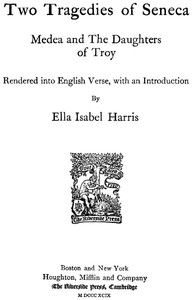
Two Tragedies of Seneca: Medea and The Daughters of Troy Rendered into English Verse
by Seneca, Lucius Annaeus
Project Gutenberg Release
Project Gutenberg ID
46058
Reading Ease
Reading ease score: 77.6 (7th grade). Fairly easy to read.
Rights: Public domain in the USA.
Summary
"Two Tragedies of Seneca: Medea and The Daughters of Troy" by Lucius Annaeus Seneca is a collection of tragedies written in the late 1st century AD. This work showcases two of Seneca’s most potent dramas, which explore themes of revenge, betrayal, and the tragic consequences of human emotion. The central character in "Medea" is the titular figure, Medea, who grapples with intense feelings of betrayal after her husband, Jason, abandons her for another woman, while "The Daughters of Troy" revolves around the aftermath of Troy's fall, focusing on the anguish of its remaining inhabitants. The opening of "Medea" sets an intense and vengeful tone as Medea calls upon various deities, suggesting her readiness to unleash chaos and take vengeance on Jason. Alone and consumed by grief and rage, she invokes dark forces, planning her revenge against her betrayer and his new bride. The introduction of the Chorus helps illustrate the chaotic emotions surrounding the deserted Medea, who feels wronged by the gods and humiliated by her husband's disloyalty. As the opening unfolds, the audience is drawn into Medea's deteriorating state of mind, which promises a poignant exploration of love turned to rage and the tragic repercussions that follow. (This is an automatically generated summary.)
Metadata
language_code
en
bookshelf
Category: Classics of Literature
Category: Plays/Films/Dramas
locc_code
PA
subject
Trojan War -- Drama
Hecuba, Queen of Troy -- Drama
Medea, consort of Aegeus, King of Athens (Mythological character) -- Drama
Seneca, Lucius Annaeus, approximately 4 B.C.-65 A.D. -- Translations into English
More by Seneca, Lucius Annaeus
Physical science in the time of Nero : $b being a translation of the Quaestiones naturales of Seneca
1910

Minor Dialogues, Together With the Dialogue on Clemency

Index of the Project Gutenberg Works of Lucius Annaeus Seneca
The Tragedies of Seneca Translated into English Verse, to Which Have Been Appended Comparative Analyses of the Corresponding Greek and Roman Plays, and a Mythological Index

Seneca's Morals of a Happy Life, Benefits, Anger and Clemency