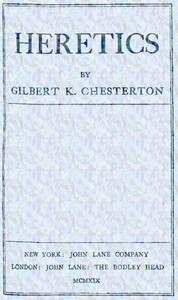
Heretics
by Chesterton, G. K. (Gilbert Keith)
Project Gutenberg Release
Project Gutenberg ID
470
Reading Ease
Reading ease score: 67.5 (8th & 9th grade). Neither easy nor difficult to read.
Rights: Public domain in the USA.
Summary
"Heretics" by G. K. Chesterton is a critical examination and philosophical treatise written in the early 20th century. The book addresses the moral and intellectual confusion of modern society, particularly the shifting definitions and attitudes toward orthodoxy and heresy. Chesterton critiques prominent figures of his time, such as Rudyard Kipling and H.G. Wells, as he explores the erosion of philosophical thought and the significance of fundamental beliefs in literature and politics. At the start of "Heretics," Chesterton lays the groundwork for his arguments by contrasting the ancient notions of heresy and orthodoxy with contemporary perspectives. He observes that what was once considered honorable—standing firm in one's beliefs against the crowd—has become inverted; now, the term "heretic" is often worn as a badge of pride by those who release themselves from conventional truths. Chesterton discusses the dangers of abandoning overarching ideals, claiming that society is losing sight of the broader questions of existence, morality, and philosophy in favor of ephemeral details. The opening portions introduce his intention to confront various notable thinkers, positioning them as representatives of flawed philosophies that neglect the essential truths of human experience. (This is an automatically generated summary.)
Metadata
bookshelf
Category: Essays, Letters & Speeches
Category: Philosophy & Ethics
Category: Religion/Spirituality
Christianity
language_code
en
locc_code
PR
subject
Apologetics
Chesterton, G. K. (Gilbert Keith), 1874-1936