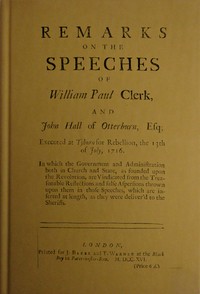
Remarks on the speeches of William Paul Clerk, and John Hall of Otterburn, Esq : $b Executed at Tyburn for rebellion, the 13th of July, 1716
by Defoe, Daniel
Publication Year
1716
Project Gutenberg Release
Project Gutenberg ID
70523
Reading Ease
Reading ease score: 54.4 (10th to 12th grade). Somewhat difficult to read.
Rights: Public domain in the USA.
Summary
"Remarks on the speeches of William Paul Clerk, and John Hall of Otterburn, Esq…" is an analytical critique of the final speeches of two men executed for rebellion, written in the early 18th century. The text serves as a political commentary, defending the established government and challenging the narratives presented by the rebels in their speeches. The book critiques the motivations and claims made by Paul and Hall, arguing against their portrayals as martyrs while reaffirming the legitimacy of the reigning authority. In the text, both William Paul and John Hall make fervent declarations supporting the Jacobite cause and lamenting their fates. Paul expresses regret for his past mistakes, yet simultaneously attempts to leverage his execution for martyrdom, while Hall positions himself as a noble figure sacrificed for his rightful king. The author of the "Remarks," however, systematically dismantles their arguments, outlining the inconsistencies and fallacies in their claims and highlighting their previous attempts to save their lives, which contradict their postures of unwavering loyalty. Ultimately, the book argues against the legitimacy of the rebels' assertions and profoundly critiques the idea of loyalty to a dethroned monarch in favor of the established order. (This is an automatically generated summary.)
Description
Sometimes attributed to Daniel Defoe.
Metadata
bookshelf
Category: Essays, Letters & Speeches
Category: Politics
Category: History - Early Modern (c. 1450-1750)
language_code
en
locc_code
KD
DA
subject
Jacobite Rebellion, 1715
Paul, William, 1678-1716 -- Trials, litigation, etc.
Hall, John, -1716 -- Trials, litigation, etc.
Trials (Treason) -- Great Britain -- Early works to 1800
Nonjurors